Cart
0
🌿 Your order supports a greener planet!
You may also like


🌿 Your order supports a greener planet!
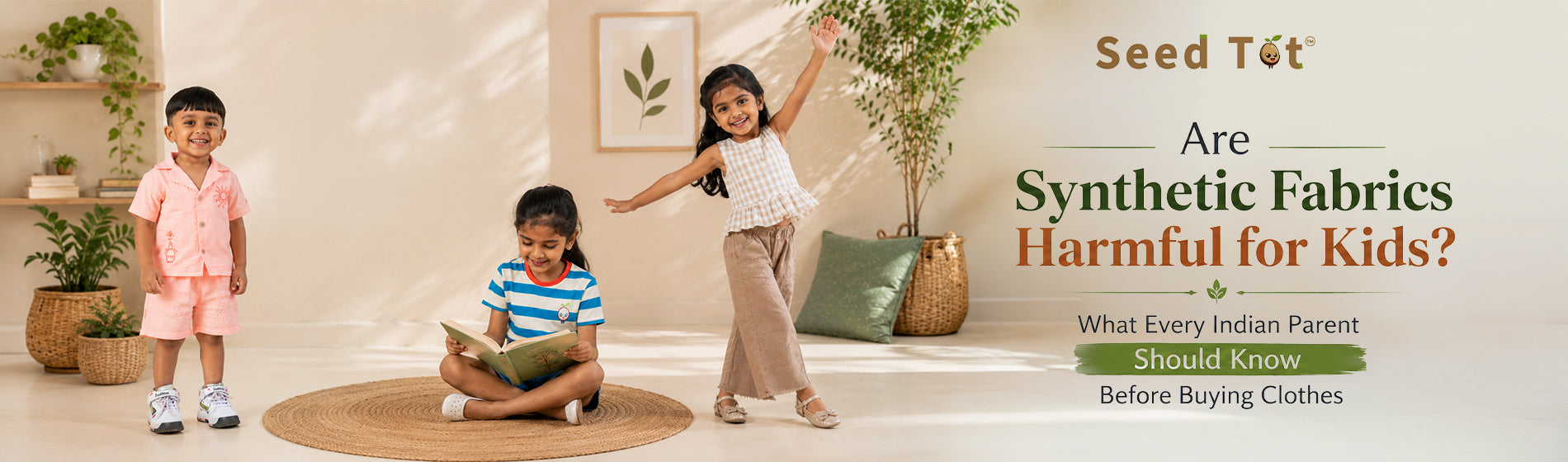
Every parent standing in a clothing store faces the same silent question: Is this fabric safe for my child?
In India, where temperatures stay high for most of the year and humidity adds to the discomfort, fabric choice matters more than most parents realize. Synthetic fabrics fill store shelves. They look bright, feel smooth, and cost less. But are they the right choice for your child's skin?
This guide breaks down everything you need to know about synthetic fabrics and kids' clothing, so you shop with confidence.
Synthetic fabric is not toxic but creates harmful conditions for kids in India's hot, humid climate.
Polyester traps sweat and heat, leading to skin rashes, heat rashes, and discomfort in children.
Babies are more vulnerable because their skin is thinner and absorbs more chemicals from clothing.
100% Cotton, organic cotton, muslin, and bamboo fabric are the best choices for kids' clothing in India.
Always read fabric labels and do a touch test before buying clothes for your child.

Synthetic fabrics are man-made textiles produced from chemical compounds. Polyester, nylon, acrylic, and rayon fall into this category. Manufacturers produce them in high volumes at low cost, which is why you see them everywhere, from school uniforms to festive wear.
These fabrics mimic the look of natural fibers but behave very differently when they touch skin, especially a child's skin.
The short answer: synthetic fabric is not inherently toxic. But it creates conditions that are harmful for kids, particularly in India's climate.
Here is what happens when children wear synthetic clothing regularly:
Poor breathability. Polyester and nylon trap heat and moisture against the skin. In India's warm and humid weather, this creates a breeding ground for bacteria and fungus.
Friction and irritation. Synthetic fibers are stiffer than natural ones. On soft, sensitive skin, they cause constant rubbing that leads to redness and rashes.
Chemical residues. Many synthetic garments carry dyes, finishing agents, and flame retardants. These chemicals sit close to the skin all day.
Static buildup. Synthetic fabrics generate static electricity. This can irritate the skin and attract dust particles, which is a concern for children with allergies.
Sweat trapping. When kids sweat in synthetic clothes, that moisture has nowhere to go. Trapped sweat leads to heat rashes, prickly heat, and discomfort.
None of these conditions are comfortable for any child. For babies and toddlers with extra-sensitive skin, they become genuine health concerns.
Yes. Synthetic clothes and skin rashes in children are directly linked in many cases.
Doctors and dermatologists in India regularly see children with contact dermatitis, a type of skin rash triggered by the fabric touching the skin. The rash appears as red patches, small bumps, or dry flaky skin, usually in areas where clothing fits tightly.
The triggers are:
The synthetic fiber itself
Dyes used to color the garment
Chemical finishes applied during manufacturing
If your child develops a rash after wearing a new outfit, the fabric is often the first place to look.
Babies need extra attention here. A baby's skin is 30% thinner than adult skin and absorbs more of whatever touches it. That makes polyester clothes for babies a real concern.
Babies cannot regulate body temperature as well as older children or adults. Polyester traps heat. In India's climate, this combination causes:
Diaper area rashes
Neck fold irritation
Heat rashes across the back and stomach
For newborns especially, the stakes are higher. Their immune systems are still building. Constant skin irritation from synthetic fabric adds unnecessary stress to their bodies.
|
Feature |
Cotton |
Polyester |
|
Breathability |
High |
Low |
|
Moisture absorption |
Absorbs sweat |
Traps sweat |
|
Softness on skin |
Naturally soft |
Can be rough |
|
Suitability for India's climate |
Excellent |
Poor |
|
Durability |
Good with care |
Higher |
|
Cost |
Budget friendly |
Lower |
For daily wear, especially in India, cotton wins clearly when comfort and safety are the priority.

The best fabrics for kids' clothing in India are those that work with the climate, not against it.
1. 100% Cotton Cotton remains the gold standard. It absorbs moisture, stays cool, and is gentle on skin. For everyday wear, school clothes, and sleepwear, cotton is the safest and most comfortable choice.
2. Organic Cotton Organic cotton goes a step further. It is grown without synthetic pesticides and processed without harsh chemicals. For babies and children with sensitive skin, organic cotton reduces the risk of any chemical exposure.
3. Muslin Cotton A lightweight, breathable weave of cotton, muslin is excellent for babies. It gets softer with every wash. It is a popular choice for swaddles, inner layers, and summer outfits.
4. Bamboo Fabric Bamboo-derived fabric is soft, breathable, and naturally antimicrobial. It is a newer option in India but worth considering, especially for children prone to allergies or rashes.
5. Linen Linen is breathable and absorbent. For older children in very hot regions, linen works well for loose-fit summer outfits.
Indian markets mix fabric types, and labels are not always clear. Here is how to identify synthetic fabrics before you buy:
Read the label. Look for terms like polyester, nylon, acrylic, or spandex. If the label says 100% cotton, confirm it.
Touch test. Natural fabrics feel softer and have a matte finish. Synthetic fabrics often feel smoother, shinier, or slightly slippery.
Price signal. Very low-priced garments are often made from synthetic blends. This is not a rule, but it is a useful signal.
Burn test (at home only). A small thread from the garment can tell you a lot. Cotton burns cleanly and smells like paper. Polyester melts, beads up, and smells chemical.
Ask the seller. In local markets, sellers usually know the fabric type. Ask directly.
Polyester is not ideal for children in India. It does not breathe well and traps heat and moisture against the skin. In India's climate, this leads to sweat rashes, prickly heat, and discomfort. Cotton is a far better option for daily wear in Indian weather.
Yes. Synthetic clothes are a common cause of contact dermatitis in children. The fabric fibers, dyes, and chemical finishes in synthetic garments irritate sensitive skin. Rashes often appear as red patches or bumps in areas where clothes fit tightly.
Polyester clothes pose a higher risk for babies. Baby skin is thinner and more sensitive than adult skin. Polyester traps heat and moisture, which increases the chance of heat rashes and diaper area irritation. For babies, 100% cotton or organic cotton clothing is strongly recommended.
The best fabrics for kids' clothing in India are 100% cotton, organic cotton, muslin, and bamboo fabric. These fabrics breathe well, absorb sweat, and are gentle on sensitive skin. They suit India's warm climate and reduce the risk of rashes and skin irritation.
Check the care label for fabric content. Feel the fabric: synthetic materials often feel smoother or slightly shiny. Ask the seller directly about the fabric type. Very low-priced garments often use synthetic blends. If you are at home, a burn test on a small thread helps confirm cotton versus polyester.
The fabric your child wears every day matters. In India's climate, synthetic fabrics create real discomfort and skin risks for children, especially babies and toddlers with sensitive skin.
Choosing natural fabrics like 100% cotton is a simple, practical step that protects your child's skin and keeps them comfortable through long school days, play hours, and restful nights.
When you shop for your child's next outfit, flip the tag. Read the fabric content. Your child's skin will thank you.


